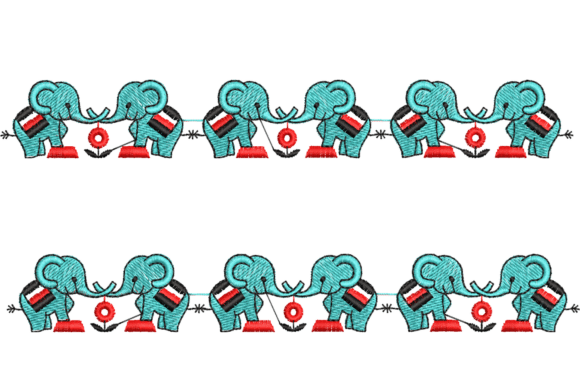
Elephant and Floral Border Embroidery Review
As an experienced embroidery designer who has spent years crafting assets for small business merchandise, I approach every new digital file with a critical eye. When evaluating Elephant and Floral Border Embroidery, my focus shifts immediately from aesthetic appeal to practical application. This piece is not merely a decorative element; it is a potential cornerstone for brand identity on custom apparel, embroidered patches, and product labels. In this review, I will dissect how this design performs in real-world commercial scenarios, specifically for boutique owners, Etsy sellers, and creative studios looking to elevate their handmade products.
First Impressions: A Blend of Playful Elegance
The moment you view the Elephant and Floral Border Embroidery, the visual personality is distinct. It strikes a delicate balance between the whimsical charm of animal motifs and the sophisticated structure of floral arrangements. For a small business owner, this duality is invaluable. The design feels professional yet approachable, making it suitable for a wide range of brands, from organic bakeries and florists to pet care boutiques and artisanal craft shops.
The description highlights a "balanced combination," which translates well to the stitch work. Unlike designs that rely solely on bold, aggressive shapes, this border offers a warm, inviting texture. It suggests a brand that values craftsmanship and attention to detail. Whether used as a standalone logo accent or a framing device for text, the machine embroidery design projects a sense of quality that can significantly enhance perceived product value. It avoids being too childish while maintaining a friendly vibe that resonates with modern consumers seeking authentic, handmade goods.
Real-World Business Applications
The true test of any embroidery file lies in its versatility across different mediums. I have analyzed how Elephant and Floral Border Embroidery could be integrated into various revenue-generating items for small businesses.
- Embroidered Patches: This design excels as a patch. The border nature allows it to wrap around logos or stand alone as a badge on denim jackets, tote bags, or aprons. It adds a tactile, premium feel that printed graphics simply cannot match.
- Staff Uniforms and Aprons: For cafes, bakeries, or retail boutiques, placing this design on the chest pocket or hemline of an apron creates a cohesive team look. The elephant motif brings a unique character to staff uniforms without overpowering the brand name.
- Caps and Hats: The linear flow of the border makes it ideal for cap embroidery. It can curve gently over the front panel or run along the side, adding a stylish touch to promotional headwear.
- Tote Bag Design: As a recurring pattern or a single focal point on canvas totes, this design reinforces the eco-friendly, artisanal image often associated with shopping bags sold at craft fairs or online stores.
- Product Packaging Accents: Beyond clothing, consider using this as a label for packaging. Stitching this onto kraft paper tags or fabric hangtags elevates the unboxing experience, turning a simple purchase into a memorable event.
In these contexts, the commercial embroidery aspect is crucial. The design must hold up under scrutiny, offering a finished product that customers are proud to wear or display.
Strategic Considerations and Limitations
While the design is versatile, there are specific areas where caution is required. As a designer, I always advise clients to consider the physical constraints of their intended substrate.
Small Patch Sizes: If you intend to create miniature patches, you must verify the stitch density. Intricate details within the floral elements may become muddy if scaled down too far. Always test the design at the smallest intended size before mass production.
Curved Surfaces: While caps are a great use case, the curvature of a cap front can distort straight lines. The border design needs to be carefully digitized to follow the natural curve of the hat, ensuring the elephants and flowers do not appear stretched or squashed.
Fabric Texture and Color: The design features detailed outlines. On highly textured fabrics like heavy fleece or thick wool, the stitches may not lay flat, obscuring the fine details. Similarly, on dark uniforms, the thread colors must be chosen with high contrast in mind. Without proper underlay or color selection, the white or light floral elements might disappear against a black background.
Washing Durability: For items that require frequent washing, such as kitchen aprons or work shirts, ensure the design uses a dense enough fill to prevent snagging. Loose threads can catch on Velcro or zippers, leading to premature wear on the handmade product.
Impact on Brand Identity and Customer Trust
In the world of small business merch, visual consistency is key to building trust. Customers associate high-quality embroidery with reliability and durability. By incorporating Elephant and Floral Border Embroidery into your branding assets, you signal that you care about the presentation of your goods.
A well-executed embroidered patch or logo accent serves as a subtle marketing tool. It increases recognition because it is harder to replicate than a print. When a customer sees your unique border design on a colleague's uniform or a friend's tote bag, it reinforces your brand identity. It transforms a generic item into a branded experience, fostering a deeper connection between the buyer and your business. This level of professionalism can justify higher price points and encourage repeat purchases.
Practical Designer Notes for Production
Before committing to a large production run, there are several technical steps every designer and business owner should take. These checks ensure that the digital embroidery file translates perfectly to the final textile.
- Test in Black and White: Start by stitching the design in monochrome. This helps you evaluate the stitch density and spacing without the distraction of color. If the design looks cluttered in one color, adding more hues will not fix the underlying structural issues.
- Check Hoop Size and Placement: Confirm the maximum hoop size supported by the file. Ensure the design fits within the available space on your target garment, whether it is a cap front, a shirt pocket, or a large tote bag.
- Review Thread Color Contrast: Select thread colors that pop against your fabric. Dark backgrounds usually require lighter, brighter threads for the floral details to remain visible.
- Inspect Spacing and Density: Look closely at the transition between the elephant figures and the flowers. There should be adequate spacing to prevent the fabric from puckering, especially on lightweight materials.
- Use Proper Stabilizer: The choice of stabilizer is just as important as the design itself. Use cut-away stabilizers for stretchy fabrics like knits to maintain shape, and tear-away for stable wovens. Skipping this step can ruin the finish of the finished product.
- Create a Printable Mockup: Before sewing, generate a printable mockup for client approval. This allows stakeholders to visualize the design on the actual merchandise and provide feedback before expensive materials are wasted.
- Confirm Commercial Licensing: Finally, double-check the license terms. Ensure you have the right to use the design assets for commercial purposes, including selling items with the logo on them.
By following these guidelines, you can maximize the potential of Elephant and Floral Border Embroidery. It is a robust tool for creating distinctive, high-value merchandise that stands out in a crowded marketplace. Whether you are decorating a fleet of delivery vans or launching a line of artisanal aprons, this design offers the flexibility and charm needed to make a lasting impression.